Friday, January 22, 2010

Harmless drudges, bad and good Bewleys and Billy in the Bowl


I'm sure that many you have been asking, why has nobody previously compiled a dictionary of Irish biography? I'm sure you have. Well, as it happens, they have, and I've been looking at all three of them. They're one volume affairs, each compiled by a single person, which makes them rather impressive. The first, published in 1878, was A Compendium of Irish Biography: Comprising Sketches of Distinguished Irishmen and of Eminent Persons Connected with Ireland by Office or by their Writings, by Alfred John Webb, a nationalist politician. It's a monumental work, with some 1,500 lives over nearly 600 pages, citing 350 authorities as source for the information. The next, published 50 years later in 1928, was A Concise Dictionary of Irish Biography, by John Smyth Crone, a Belfast-born physician who moved to London where he explored his Irish antiquarian interests. Dr. Crone amassed more than 4,000 lives, although in the fewer than 300 pages published, they're capsule entries, albeit useful. Another 50 years on, in 1978, came A Dictionary of Irish Biography, by Henry Boylan, a writer and civil servant, who provided just over 1,000 elegantly-written lives, in under 400 pages. Now comes the DIB, an upstart just 32 years after Boylan's work. It's obviously an enterprise in a different league from its forbears, but also following in their footsteps. All hail these harmless drudges! Enthusiastic amateurs, like myself.

I don't mean to go on about this Irish nazi thing, but there's something about being a "B" that seems to bring it out. I read Charles Bewley's "unreliable" autobiography Memoirs of a Wild Goose a few years back,and while it's full of wit and naughtiness, it can't paper over the deep unpleasantness that lies underneath. He was from an establishment family (of which more later), and he was very bright. He was also a contrarian, so to the consternation of his staunchly unionist and quaker family, he became equally staunchly nationalist and catholic. He was a successful barrister, among other things serving prominently in the courts set up by the Dáil in parallel to the British ones during the war of independence. He was a talented linguist, whose skills included excellent German. Another prominent Sinn Feiner with excellent German was Robert Briscoe, whose Jewish family had moved to Dublin from Lithuania. It was accordingly sensible to send both of them to Germany on an unofficial Irish trade delegation during the war of independence. It did not go well. One night, Bewley turned up drunk at a Berlin cafe and hurled anti-semitic insults at Briscoe and the cafe's Jewish owner. He was thrown out. (Bewley's own account of the incident included the admission that a waiter had asked him if Briscoe was the Irish consul, to which he relied "that he was not, and added that it was not likely that a Jew of this type would be appointed.") He kept it up. When Briscoe attempted to buy a ship for smuggling fugitive IRA men out of Ireland and weapons back in, Bewley told Dublin, falsely, that Briscoe was motivated by financial gain. Bewley tried to obtain premises for the Irish delegation, and told Dublin that he had rejected an offer from a Mr. Loewi and a Mr. Jacobowitz, adding "I think it likely that in any bargain with gentlemen of their ancestry we would not get the best of it." On other occasions, he told Dublin that Briscoe was "out on the make" and "a decidedly ... shady character." To some extent Bewley was pushing at an open door: the minister of external affairs, George Gavan Duffy, to whom he reported, once wrote that Briscoe was "an undesirable person". (Briscoe served for 38 years in the Dáil and became lord mayor of Dublin.)

Worse was to come. After a break, Bewley rejoined the diplomatic service in 1929 and four years later was posted .... back to Berlin. Upon presdenting his credentials to President von Hindenburg he made a point, as the DIB put it, of praising "the rebirth of the German nation under Hitler." He regularly attended nazi rallies, which were avoided by diplomats of other democratic states. Because of his proximity to nazi circles - including Hermann Goering, on whom he later wrote a book that is quoted in Holocaust denial circles - his descriptions of anti-Jewish measures were most thorough and informative. He also added his own spin: that "no Jew is bound by any duty towards a non-Jew", or "bound by the ordinary moral law ... in his relations with non-Jews" and that "the Jew ... strives to destroy [non-Jewish patriotism and religion and morals] when allowed into positions of power or influence." He went on to say that if these precepts were true, it was "only logical for the [German] government to take steps to eliminate an influence ... so fatal to the race." He told a German newspaper in 1937 that "your Reich and its leaders have many admirers among our youth."

One of the the results of the steps that Germany took to "eliminate" this "influence" was that many European Jews became refugees, particularly after the Munich crisis of 1938. Bewley created harrowing scenarios of these Jews turning up on Irish doorsteps, perhaps sneakily slipping first into Britain from which they could easily take the Holyhead ferry to holy Ireland. Dublin accordingly asked Bewley for a report on the state of anti-semitism in Germany, Italy, Hungary, Poland and Czechoslovakia - akin to asking Hannibal Lecter for his views on anthropophagy. His report, in the words of the historian Dermot Keogh, "uncritically mirrored the central Nazi ideas on anti-Semitism" and, after lengthy exposition, concluded:
It is ... clear that if the Irish press and public opinion indulge in paroxysms of moral indignation at the teratment of Jews but remain blind and deaf to atrocities committed on Christians in other parts of the world, they lay themsleves open to a charge of ignorance or hypocrisy, and scarcely contribute to an amelioration of the general international situation.

After this, even Dublin had had enough, and Bewley was recalled. Instead, he stayed in continental Europe throughout the Second World War, in Germany and Austria and, having narrowly escaped execution as a collaborator, moved to Rome, where after a period of silence, he was eventually permitted to attend St Patrick's day celebrations at the embassy until his death in 1969. The DIB thinks he desired "to be diametrically different to established conventions and to be awkward." True enough, although supporting the nazis in 1937 Berlin wasn't exactly the sign of a maverick character.


Fortunately, when most Irish, including me, hear the name Bewley, they have much happier associations that the revolting Charles. In particular, they revere Ernest Bewley, a cousin of Charles (they shared a grandfather), who founded the legendary Bewley's Oriental Cafes in Dublin. Bewley's - particularly the remaining branch in Grafton Street (pictured) - has simply been the best place for a cup of tea in everybody's living memory. The flagship Grafton Street branch was in fact the last (1927) of four cafes, the first of which was opened in 1896. Spread over several floors with different rooms of varying function and character, it's a place I still visit whenever I'm in Dublin and eat the cherry buns that my mother introduced me to as a treat on our visits to town. Proust had his madeleine and I (no comparison of literary worth intended) have my Bewley's cherry bun - a vivid taste memory that takes me back to early, fondly-remembered times. To be truthful, the place has had its ups and downs: the cherry buns became heartbreakingly poor in the 1980s (imagine biting into a stale madeleine). Commercial vicissitudes have led to all sorts of transformations and tinkering, not to mention the closure of the Westmoreland St and Great Georges St branches. But on my last visit in 2009 with my mother's sister, it was still as wonderful as ever, and the cherry buns were completely up to scratch. My mother always spoke reverentially of the Bewley family: "quakers" - always a term of approbation with her - and "good to their employees". Ernest's son Victor in particular, who turned around the business and paid off its debts, was always referrred to with great respect.


Some short lives: you'll have gathered by now that the DIB - and I - have something of an antiquarian bent. So it's a pleasant surprise to find a lengthy quote from Shane MacGowan in the middle of an 18th century life. The subject is the Dublin beggar Billy in the Bowl, whose name matched his appearance: he had no legs and moved around in a large bowl with wheels attached. He was apparently a charmer and somewhat successful with women. He was also a robber and ended up in jail, where worthies would come to take a look at him. He's mentioned in Finnegans Wake (the book not the song) and in The Pogues' The Sick Bed of Cuchulainn: the following lines are quoted in full in the DIB: "You remember that foul evening when you heard the banshees howl / There was lazy drunken bastards singing 'Billy in the Bowl' / They took you up to midnight mass and left you in the lurch / So you dropped a button in the plate and spewed up in the church." Fabulous stuff. I haven't been able to find the song MacGowan refers to, although there's a Dubliners' song, The Twang Man, which also mentions it. Charles Bianconi (pictured), an Italian artisan, started a coach service in Tipperary in 1815 with one horse; by the 1840s, he had 100 coaches, 1,400 horses and served 120 cities. Before the railway, it was how you got around Ireland, and even later the Bianconi service remained significant, offering feeder coaches to the main train stations. He embraced nationalist politics and organized monster meetings in Tipperary for Daniel O'Connell; a daughter married the Liberator's nephew and a son his grand-daughter. Isaac Bickerstaff, now all but forgotten, but a formidable dramatist in the 18th century: after a towering 12 years on the London stage, he had to take the conventional route of blackmailed gay men and flee to "the continent", where he died "in poverty and exile" about a century before Oscar Wilde endured a similar fate.

Thursday, January 21, 2010

The tar-water bishop and the go-slow civil servant

I studied law at Berkeley (pronounced Burke-ley), which is named after George, Bishop Berkeley (currently pronounced Barclay). I've long suspected that he pronounced his name the Californian way, based on this circumstantial observation: the pejorative Cockney epithet "berk" (pronounced "burke") is an abbreviation of "Berkshire Hunt" (it rhymes; work it out). It's not pronounced "bark". Anyway ...

Berkeley is called Berkeley because of a poem by Berkeley, called Prospect of Planting Arts and Learning in America, which contains the line "westward the course of empire takes its way." Berkeley, a Kilkenny man, tried to start a university in the Americas - Bermuda was one possible location, Rhode Island another. The venture failed, but the precepts that he expounded influenced the foundation of other new world colleges, including Columbia and Yale. More than 100 years later, when it was planned to locate the new University of California in a dull place near Oakland called Ocean View, one of the trustees, a lawyer named Frederick Billings (the Montana city is named for him), recalled Berkeley's poem, with its appeal to the manifest destiny of the westward push, and suggested the writer's name for the new institution. (The pictured allegorical image, named for the same stanza, is by Emanuel Leutze and hangs in the House of Representatives. Can't get more manifest than that.)

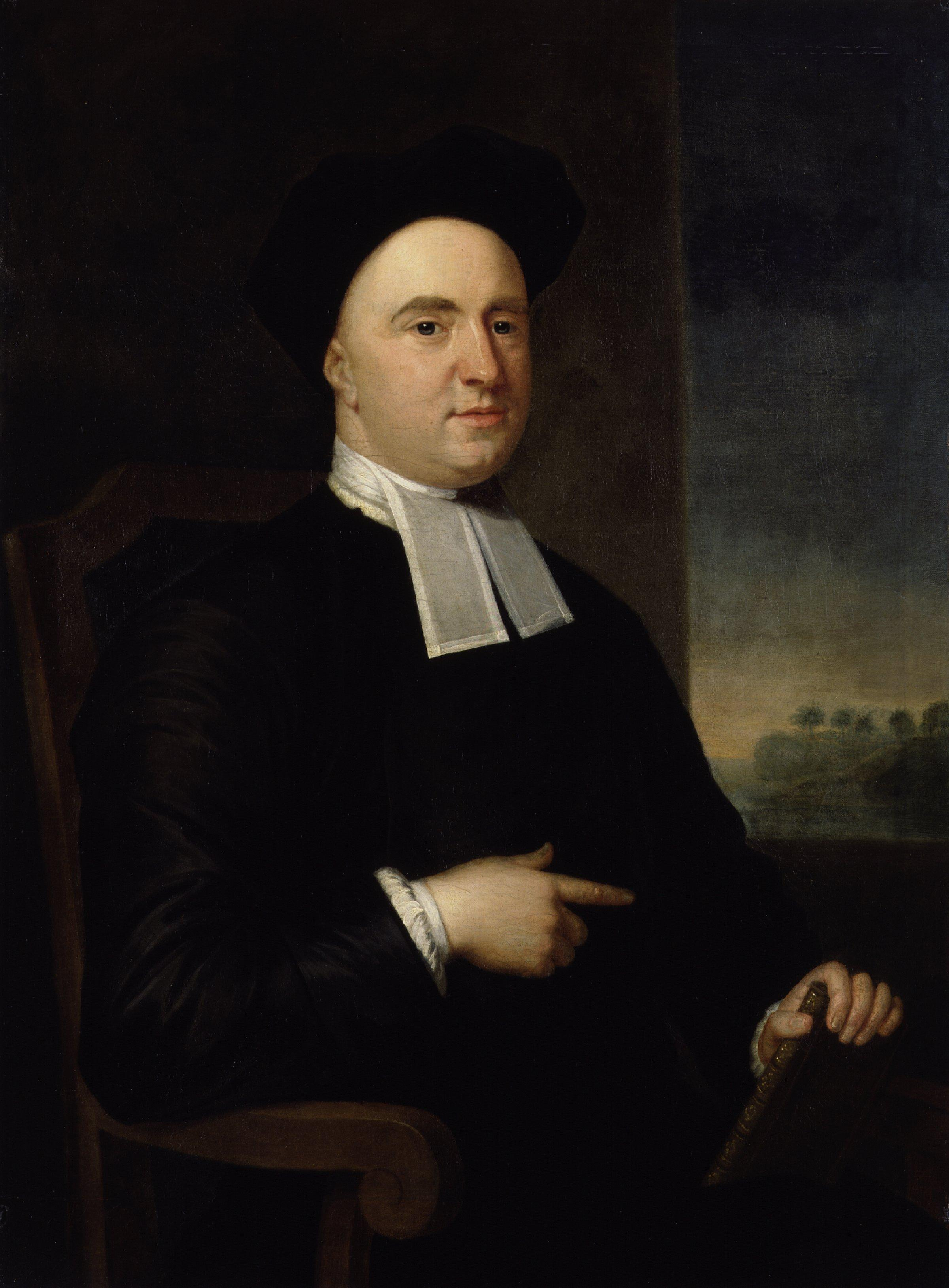
Berkeley, after a career at Trinity College Dublin and his American sojourn, became Bishop of Cloyne in east Cork. It's a small place, not much more than a crossroads, really, with a pub at each corner, close to the more substantial town of Midleton, home to Jameson and Paddy's whiskeys. There's a round tower and the cathedral, St Coleman's, which is more the size of the parish church that it now is. That's about it. When Berkeley moved to Cloyne, in 1734, at the age of 49, he had already had two careers, as an an acclaimed philosopher and, as the DIB puts it, the "social idealist" behind the American university project. He threw himself into his work, particularly into alleviating the poverty of so many within the diocese. While writing theoretically on economics he engaged in practical intervention, encouraging local industry and distributing money to the poor during times of hardship. I own the second edition of his best-seller from this period, Siris: a Chain of Philosophical Reflexions and Inquiries Concerning the Virtues of Tar Water, And divers other Subjects connected together and arising one from another (1744), which bears the epigraph from Galatians, "As we have opportunity, let us do good unto all men." As the DIB explains, Berkeley extolled the virtues of tar water - apparently learned from the Narrangansetts of Rhode Island - as a panacea for a suffering population that otherwise had scant access to medical care: "his claims for the substance were modest; he found it good for alleviating his own health problems, and found that others reported similar results." The wits mocked him, and tar water sales soared.  The medicinal use of tar water apparently lasted a long time, although by 1911 the Encyclopedia Britannica  would state that "taken in large quantities it causes pain and vomiting and dark urine, symptoms similar to carbolic acid poisoning." Did I mention that Berkeley was a great philosopher? Of course, you knew that already. The DIB's entry, by Paul O'Grady, is both thorough and touching, culminating in a fine tribute from another Irish philosopher, A. A. Luce, "who remarked that one initially thinks on reading him that Berkeley is building a house, but subsequently discovers that he has built a church."

I mentioned a couple of days ago the anti-semitism of "Two-Gun" Pat Belton, the politician and businessman.
Writing the day prior to that about Samuel Beckett, I didn't refer to his role as a witness on behalf of a Jewish cousin ny marriage, Henry Sinclair, who sued the writer Oliver St John Gogarty (of whom more when we get the the Gs), who had written some derogatory and anti-semitic lines which Sinclair claimed, successfully, referred to him. Beckett was roundly blackguarded by Gogarty's barrister, and accused of belonging to a "coterie of bawds and blasphemers". This was in 1937. In 1953, a civil servant at the Department of Justice named Peter Berry responded to a request by Robert Briscoe, a Jewish senior member of the governing party, 1916 combatant and future Lord Mayor of Dublin, that Ireland admit 10 Jewish refugee families from continental Europe. In his memorandum, Berry wrote:
In the administration of the alien laws it has always been recognized ... that the question of admission of aliens of Jewish blood presents a special problem and the alien laws have been administered less liberally in their case ... there is a fairly strong anti-Semitic feeling throughout the country based, perhaps, on historical reasons, the fact that the Jews have remained a separate community within the community and have not permitted themselves to be assimilated, and that for their numbers they appear to have disproportionate wealth and influence. [emphasis added]

Berry also referred to our old friend "international Jewry" using money to obtain preferential treatment of Jewish refugees. In fact, the cabinet, to which the memorandum was submitted, overruled Berry and decided that 5 of the 10 families should be admitted. Berry - who also owned up to pursuing a "go-slow policy" in dealing with Jewish refugee applications - showed a civil servant mentality typical of his peers in many countries before, during and after the Second World War, including the USA, UK and France. And this unquestionably ugly stuff should not diminish the fact that I'm writing about him today because he ended up a hero in one of the biggest Irish political scandals following independence.

In 1969, when violence in Northern Ireland had reached a very significant and dangerous level, Berry, by then a senior Department of Justice officer, learned that an Irish cabinet minister - later revealed to be Charles Haughey (pictured) - did a deal with the IRA that allowed it to use the Republic of Ireland unmolested for cross-border operations. He also learned that the IRA had been meeting with Captain James Kelly, Ireland's director of military intelligence. Berry later learned that Kelly promised the IRA money to purchase arms, and that Haughey, together with another cabinet member, Neil Blaney, had connived in this scheme, diverting funds from a civilian relief project administered by Haughey. The then-taoiseach (prime minister) Jack Lynch was unaware of this maverick operation by his subordinates. Berry was tipped off that weapons, allegedly acquired by a Flemish ex-nazi restaurateur named Albert Luykx, were due to arrive in Dublin, en route to the North. Berry brought in the police to prevent entry of the weapons and confronted Haughey on the telephone; the shipment was called off. (Ironically, Berry had approved Luykx' admission to Ireland in 1948, during the period he was "going slow" on Jewish applications.) Berry's life was threatened by republicans for his role in the affair, and for testifying against Haughey, Blaney, Kelly and Luykx, among others. The trials, poorly handled by the prosecution, ended in the acquittal of all defendants (or dismissal of charges): Haughey, of course, went on to be taoiseach on two occasions; his utter personal and financial corruption, although widely known, was not officially confirmed until after his retirement.

The DIB's Partrick Maume does a very nice balancing act on Berry, giving space to the significant arguments for both positive and negative assessments. Maume quotes another Irish maverick (and hardly a fan), Noel Browne on Berry: "a main of obsessional type, preoccupied with the minutiae of his job, but a man of extraordinary dedication in his way to what he felt were the best interests of his job." Damned a little with faint praise, but praiseworthy still, up to a point.

Tuesday, January 19, 2010

The Irish nazi party, the tribune of women workers and assorted lucky colonists

I didn't expect to see these words in the DIB: "... co-founder (1934) of the Irish branch of Hitler's National Socialist Party."  I knew that various Germans in high positions in Irish academic and cultural life were nazi sympathizers and worse, but hadn't known that this amounted to a branch. Were there meetings? Membership cards? Agendas, motions moved and seconded, and so on? And what did they talk about? Where Celts fit into racial theory? Which Dublin hotel would be used as Gestapo headquarters? Straight-arm salute techniques? The referenced co-founder will be back again when we get to the "M"s: Adolph Mahr turned up today because, as director of the National Museum, he discouraged a Jewish donor, Albert Bender, from making donations of his father Philip's art collection. However, the correspondence between the two was spread over 7 years and is described as "friendly". Generally, Nazi policy was to "accept" all art "donations" from Jewish clients, so I'm not sure what Mahr's problem was.

Louie Bennett was on one of those activists whose energy leaves you exhausted, just on the page. Starting in the women's suffrage movement, she went on to reorganize a trade union, the Irish Women Workers' Union (IWWU), became a peace campaigner, served in public office and travelled the world in support of a wide range of causes. Partly because of her commitment to non-violence, she kept her distance from the alpha males of the Irish labor movement, notably James Connolly and James Larkin; however, in the aftermath of the Easter Rising, she campaigned against British excesses, speaking against the Black and Tans both in America and to Lloyd George personally. During the Irish civil war, she served on the Women's Peace Committee as a mediator.Protecting the rights of women in the workplace wasn't easy in conservative Ireland: even within the IWWU there was debate in the 1930s over whether it should admit married women with working husbands. She led a successful strike of laundry workers to obtain two weeks' paid holidays and, as the DIB states, "consistently condemned colonialism, fascism and armaments expenditure." I liked this detail of her character: "she often used threatened resignations as a means of controlling her colleagues." Great people aren't always easy to be around.

It's in the nature of colonial matters that dynasties come to dominate. We've seen a few of these families before and the latest are the Beresfords, who carve out 10 pages of the DIB. The first appears to be Tristram Beresford, a Kentish man sent to Ireland to build and fortify Coleraine. He annexed land and looted timber and even the London companies that installed him rebuked his corruption. It was said of him that his "tyrrany in Coleraine equalled that of the Spanish inquisition" but he successfully resisted all efforts to remove him. His son was created a baronet, and his great-great grandson,  Marcus, became the Earl of Tyrone. Marcus' son George became Marquess of Waterford. And so on. So entrenched were the Beresfords that Marcus' grandson, also Marcus, was named joint-taster of wines for Dublin port at the age of 9, a position he enjoyed for 24 years (his brother John Claudius succeeded him in this onerous position). I have no idea what this job entailed, but I see from this that in 1734 the job was worth three hundred pounds per year. The Beresfords were politicians, soldiers, churchmen - in other words, enjoying all of the the usual trappings of the entrenched ruling families.I felt a little sorry for George Thomas Beresford, who clearly had no idea of how the tide was turning: He was sent to Eton and rose in the army to the rank of major-general, after which he was installed in various parliamentary seats controlled by his elder brother. He "rarely spoke in parliament, but consistently voted against catholic emancipation" while continuing to accumulate colonial offices: governor of Co. Waterford, colonel of the county militia, and so on. Then - there being 41 catholic voters in his constituency of Waterford for every protestant - in 1825 somebody have the bright idea of fielding a candidate against him (sundy Beresfords had held the seat for 70 years). Of course, he was swept aside - he stood down before the election - although it's unfortunate, if understandable that among his opponents' election slogans was "down with the protestants". He was apparently bitter about the experience, but the family learned something: it changed its mind about catholic emancipation, voted for it, and saw poor George returned unopposed for Waterford in the 1830 election.

The Beresfords still hang on. The Wikipedia entry on the present Marquess of Waterford is so irresistibly ludicrous  that it must be quoted in full:
John Hubert de la Poer Beresford, 8th Marquess of Waterford (born 14 July 1933) is an Irish peer. He succeeded to the marquessate in 1934. He was educated Eton, and later served as a Lieutenant Royal Horse Guards Supplementary Reserve. The Marquess married, in 1957, the Lady Caroline Olein Geraldine Wyndham-Quin, daughter of 6th Earl of Dunraven and Mount-Earl and has issue. The Marquess' family seats are Curraghmore, Portlaw, County Waterford and Glenbridge Lodge, Valleymount, County Wicklow. Additionally, the Marquess' club is White's. Lord Waterford's heir apparent is Henry Nicholas de la Poer Beresford, Earl of Tyrone (b. 1958).
This picture, of the present Marquess and family before their Curraghmore home, suggests the depths into which a once-great dynasty has fallen.
 

Monday, January 18, 2010

Lyrical, physical, horizontal and despicable

I stopped the harpist Derek Bell in the street once. It was on Telegraph Avenue in Berkeley, and there he was, minding his own business, on his way back to the Bancroft Hotel. He was very gracious at the interruption and accepted my platitudes about how much I liked his music and that of The Chieftains, with whom he played from 1975 until his death in 2002. He had been a child prodigy, a multi-instrumentalist (piano and dulcimer, as well as the harp), a distinguished composer and a musician of tremendous range, who could as easily handle the classical repertoire, music hall songs and collaborations with Roger Daltry, Van Morrison and Sting. This recording, of Women of Ireland from Stanley Kubrick's film Barry Lyndon, shows Bell at his most lyrical. I also love The Chieftains' album with Van Morrison, Irish Heartbeat, which is informed by Bell's musical sense of humor displayed towards his fellow-Ulsterman, most outrageously when The Star of the County Down  segues into the Orange anthem, The Sash My Father Wore. (You'll have to find the album yourselves, but here's a lovely recording of The Star by the great John McCormack.)

I've been struck how many important scientists turn up in the DIB. I blame my own ignorance, but I had no idea how many Irish had made such significant contributions to scientific and mathematical enquiry. I've previously mentioned some naturalists, but major figures turn up in the "hard" sciences, too. My difficulty is that I am completely unequipped to do more than repeat what the dictionary says, given the complexity of their work. Thus, we have John Stewart Bell, the Belfast man whose paper On the Einstein Podolsky Rosen Paradox is decribed as "his greatest contribution to quantum theory" and whose conclusions came to be known as "Bell's Theorem". My researches reveal that this is of a class of theorems known as "no-go theorems", which show "that an idea is not possible even though it may look attractive". This, essentially, is what I feel about life. You can try to understand it here, and I wish you luck. It's dispiriting that a quantum physicist could quite easily understand history, literature or law, but in the humanities or social sciences we can't even begin to grasp what goes on in advanced physics.

Now for something I can understand. As will already be clear, there aren't that many women in the DIB. And of those that have appeared so far, there has been a concentration on nuns and nurses, although artists and social activists have also had their due. Laura Bell was none of those things: she was a grande horizontale, a 19th century courtesan - the DIB rather decorously uses the Greek word "hetaera" - who caused all sorts of trouble.  Difficult to get a sense of her from her portrait, although she seems very pretty. She graduated from work in in a Belfast draper's to acting in London to ... well. She was "a sparkling and intelligent companion" who cut a swathe through London culminating in an affair with the "Nepalese ambassador to London" (if this is Jang Bahadur, with whom Bell was linked, it's not quite right to say he was ambassador - he was already head of the government he represented whyen he visited England). She married Augustus Thistlethwayte when she was about 22. After six months she went off with his younger brother.  The brother died, and Laura returned to Augustus: his having recently inherited the family fortune was surely unconnected. She embraced Augustus' evangelical faith and threw herself into the movement, preaching in Scotland and London and holding dinners for statesmen, including Gladstone. She had a liking for guns: she apparently would summon servants by firing one. This habit was of course entirely unconnected to the unfortunate death of Augustus, in his bedroom, from a pistol shot. After her own death, Gladstone retrieved his letters to her and burned them, "for fear of their being misunderstood".

Patrick Belton - "Two-gun Pat, the Drumcondra financier" - was an otherwise unremarkable person with the fortune to be thrown into prominence by the birth of the Irish state, alas. As a young man, he became involved in the republican movement - he later claimed to have recruited Michael Collins - and went successfully into business. Decribed as an "able but erratic individual with no use for discretion", he was also "hysterically anti-communist", supporting Ireland's Blueshirt movement and Franco during the Spanish civil war, for whom he raised substantial amounts of money. He was "loudly" anti-semitic, opposing a Dublin corporation attempt to permit kosher animal slaughter as follows: "If the Jews do not conform to Christian ways, let them go back to Palestine." He started a political dynasty: three sons and a grand daughter followed him into politics.

Sunday, January 17, 2010

Becketts and Behans

I once wrote Samuel Beckett's obituary. I was working for Variety in Paris at the time, and the managing editor in New York wanted to start a morgue - newspaper slang for a collection of advance obituaries, ready to be rushed into print with a few updates whenever the dark day comes. It was about 1987, and Deirdre Bair's biography had recently appeared, so I relied quite heavily on it - although, as it turned out, it came in for quite heavy criticism for the quality of its factual research. I also made quite extensive use of John Lahr's Notes on a Cowardly Lion, a memoir of his father Bert, a great clown who (as the title suggests) played in The Wizard of Oz. Lahr played Estragon in the first two American productions of Waiting For Godot. The premiere, as it were, was at the Coconut Grove Theatre in Miami. Vladimir was played by Tom Ewell, the light comedian who starred opposite Marilyn Monore in The Seven Year Itch. The production was billed in advertising as "The Laugh Sensation of Two Continents!"  Beckett had quite a sense of humor, but I imagine he didn't find this funny. Despite this, Godot went to Broadway in April 1956, with E.G. Marshall replacing Ewell. (There's a famous Richard Avedon photo of Lahr as Gogo, which I won't post for copyright reasons, but which you can find here.)


The DIB entry is thorough. It preserves what I think is a misspelling of the name of his wife, Suzanne Dechevaux-Dumesnil  - see her gravestone here. It doesn't recount Deirdre Bair's claim that Beckett suffered a nervous breakdown upon his return to Paris from the Vaucluse in 1945 - indeed, this biography doesn't even appear in the list of DIB sources, which I think is a mistake, whatever its faults. It also implies that Beckett's resistance work was confined to his time in Paris, whereas it appears that he remained on active service after he fled south. It seems to believe that Kenneth Tynan's use of the sketch Breach in his revue Oh! Calcutta! was unlicensed: in fact, Beckett wrote it at Tynan's request; his objection was that, following the opening direction "an empty stage", Tynan had interpolated "with naked people". It doesn't mention the agreeable factoid that Beckett was the only Nobel laureate to have his athletic distinctions recorded in Wisden Cricketers' Almanack (he played a couple of first-class games while at Trinity College Dublin). He remained a cricket fan: friends would videotape English cricket matches and send them to him in Paris; I heard that he once took a big shine to an English cricket fan that he met in a bar, despite the fact (or perhaps because) the man had no idea who Beckett was.


An uncle of Sam's, Jim Beckett, is also listed. Like his nephew, he was a keen athlete; a swimming Olympian and member of the national water polo team and keen on athletics, hockey, rugby, tennis and boxing. He suffered from diabetes, which led to the amputation of his legs; the DIB suggests Sam's "obsession with infirmity and limbless bodies" may have been related to his uncle's experience.  


A friend of my father, Reena McDermott, grew up in the Crumlin council estate in Dublin, where a neighbor was Kathleen Behan. (Mrs. Behan's Crumlin home was known as "Kremlin" to the local wags.) Her brother, Peadar Kearney, had co-composed and written the original English lyrics for Amhrán na bhFiann, which became the Irish national anthem. According to Reena, Mrs B would offer sixpence to any child who could recite the whole thing. (Kearney's English song was later translated into Irish - not by him - and this version became the official anthem. I learned it at school first in English and the Irish version only later: it appears that these days children are taught just the Irish words.). They were quite a family: including Kearney, there are 6 of them in the DIB: Kathleen, her three sons Brendan, Dominic and Brian, and Brian's long-suffering wife Beatrice, an artist in her own right. Brendan was the star, of course, albeit one that has waned somewhat since his days of fame and notoriety in the late 1950s and 1960s of which the photo, with the comedian Jackie Gleason, is a mild example. The facts are well-known: he joined the republican movement at the age of 8, was caught in England at 16 with explosives and sent to Borstal (juvenile detention). Back in Ireland, he was arrested for shooting at policemen and sentenced to 14 years in prison. He was 19. He started writing in jail, and when he was released in a general amnesty after serving less than 5 years, began to write poetry in Irish and short stories in English. His first produced play, The Quare Fellow, was produced in Dublin and then in London, where it was a hit and later made into a film. The effect of success on Behan was not a happy one. He already had a weakness for the drink and there were plenty, particularly in Britain and the USA, who were happy to egg on a garulous and bibulous Irishman to greater stereotypical outrages. His next play, The Hostage (originally written in Irish) was another hit, to be followed by what the DIB calls his "masterpiece", his memoir Borstal Boy, which he had been working on since his time in prison.


My mother couldn't stand him. This was principally because of the time, shortly after my parent's marriage, that he turned up at their flat in Wellington Lane, Dublin in the small hours of the morning, drunk. He hammered at the door and shouted loudly, insisting on being let in. Although my parents knew him slightly - everybody in Dublin's small bohemia knew each other slightly at that time - it turned out that he was at the house because some IRA friends of his used to live there. Later, my father discovered some nasty anti-Semitic leaflets that had been left behind: during the Second World War, there were a few IRA types whose support of Nazi Germany was more than merely tactical. He had another run-in with family friend, Anna Gallagher (wife of the journalist J.P. Gallagher), a catholic from Belfast. Drunk (of course), he ripped into her as a "Scotch hoor". "I'm NOT Scotch!!" came the indignant reply.


All of this is so much folderol, of course. He was a fine writer and his best work still holds up. I recently saw the movie adaptation of The Quare Fellow, which was not much liked at the time, principally because of the liberties it took with Behan's play. It's a very good film, and you can see the best of Behan in it. His brother Dominic wrote some great folk songs, notably The Auld Triangle (sometime attributed to Brendan, since it featured in The Quare Fellow), sung here by the great Luke Kelly, The Patriot Game and Liverpool Lou. A third brother, Brian, was also a writer. He was a political activist in England and was expelled from the Socialist Labour League by fellow-Irishman Gerry Healy (I"m disappointed to see that Healy doesn't rate an entry in the DIB: he's in the British DNB).

Friday, January 15, 2010

Atlases, amputations and anchoresses

I was a little disappointed with the DIB's entry, by Rebecca Minch on the artist W. H. Bartlett (which is how he signed his work - the DIB gives him as William Bartlett, no middle name). Bartlett did landscape scenes in Europe, the Middle East and North America, and his work was widely published in books of engravings. His The Scenery and Antiquities of Ireland (1840 - the DIB incorrectly gives 1844) captured Ireland - particularly rural Ireland in 120 or so engravings and was a bestseller in its day. You can pick up a good quality copy for around $1,000, but relatively few of them are still about, since dealers realized years ago that they could make much more money from breaking down the books and selling the individual prints, often hand-colored. The DIB sniffs that Bartlett was not as good an artist as his contemporary J.M.W. Turner - who on earth was? - and unduly narrowly puts his "strength" in "the accuracy of man-made structures". You can see all of his Irish pictures here, and I think they show that his range was greater than that of the mere "topographical draughtsman" that the DIB states Bartlett to be. I'm very fond of this one, of Killiney Bay (in south Dublin) looking out towards Bray Head (in Wicklow) before the Vico Road and the railway were punched through along the coast. Bartlett prints are part of my Irish mental clutter, as I think they are for many people: the entry could have better explained his success and popularity.

Sadly, nothing appears to have survived of the work of another Irish artist. Francis Stewart Beatty was producing photographs within a week of the publiction in English of Louis Daguerre's manual in 1839. Beatty set up his own studio in Belfast and subsequently moved to Dublin. While he seems to have had considerable scientific ingenuity - he developed improvements to the Daguerre system and obtained a patent for a chromolithography process - he was not successful in business and died a pauper in the North Dublin workhouse and was interred in an unmarked grave.

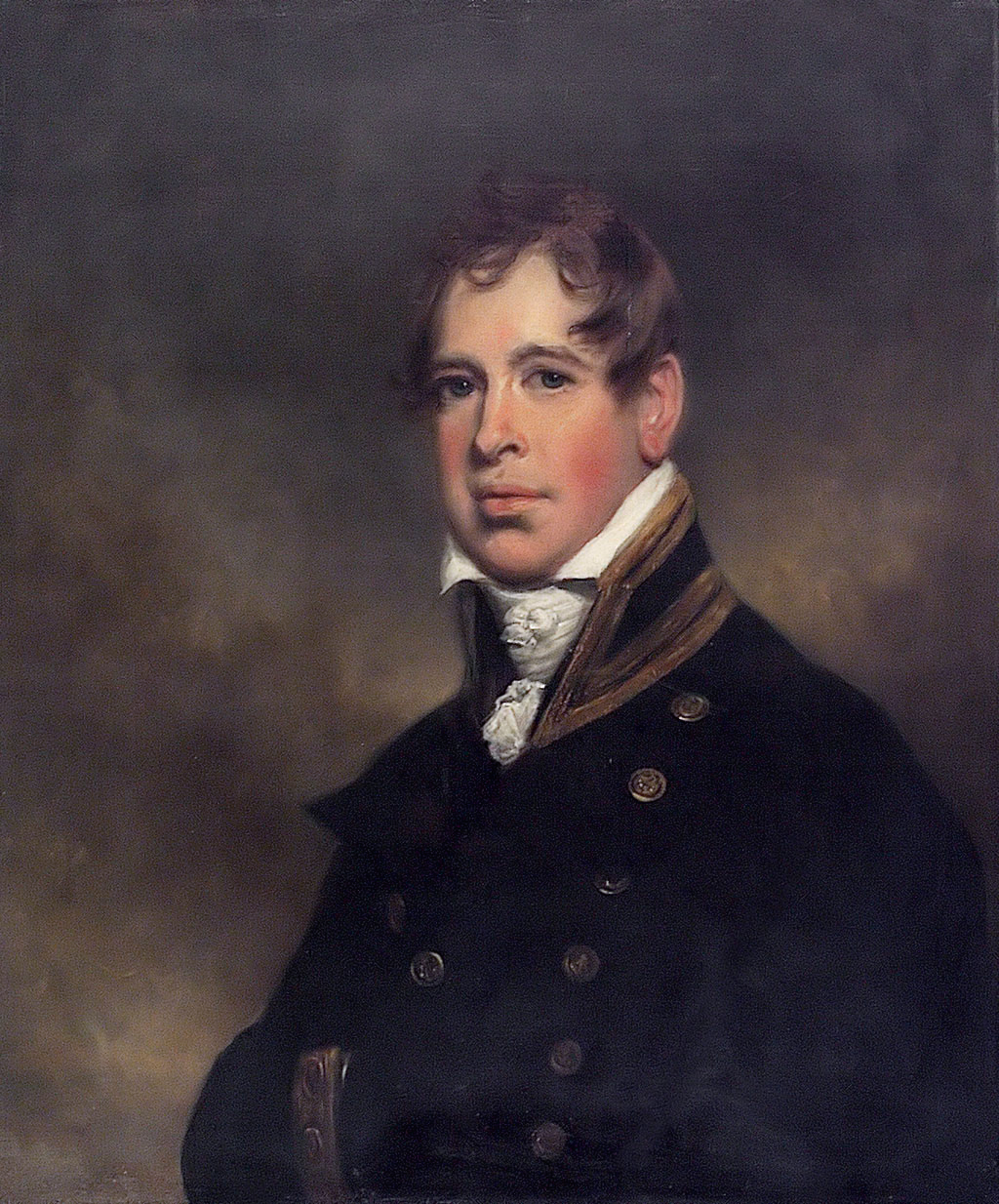
As anyone knows who's read Patrick O'Brien 's Aubrey and Maturin novels, the skill of a naval surgeon during the Napoleonic wars was measured not so much by his diagnostic abilities than the speed with which he could amputate a limb or trepan a skull. William Beatty, from Derry, was one of the best. During the Battle of Trafalgar, where he served on the flagship, HMS Victory, he excelled at his job, treating more than 100 wounded and, together with his assistants, performing 11 amputations.  The most celebrated of the wounded, of course, was Horatio, Lord Nelson, who saw his fleet sink or disable 22 French and Spanish ships without the loss of one on his side. Nelson was fatally wounded by a sniper late in the battle, and Beatty was at his side as he died. In his Authentic Narrative of the Death of Lord Nelson with the Circumstances Preceding, Attending, and Subsequent to, that Event; the Professional Report of His Lordship's Wound, and Several Interesting Anecdotes, Beatty reported, maybe not completely authentically, that Nelson's last words were "Thank God I have done my duty." As the words he spoke immediately prior to this helpfully life-summarizing statement were reported by others to have been "'fan, fan ... rub, rub ... drink, drink", Beatty's account seems improbable. But it did him no end of good; subsequently he rose high in the naval and scientific establishment, became personal physician to the future King William IV and received a knighthood. He served on the committee to erect Nelson's Column in Trafalgar Square in London. (He had nothing to do with its Dublin counterpart, Nelson's Pillar, blown up in 1966.)

Daniel Augustus Beaufort was a parson in various parts of Ireland (although he spent five years laying low in Wales, hiding from creditors). What he was good at , however, was architecture and map-making. His A New Map of Ireland Civil and Ecclesiastical (1792), from which this map is taken, was full of unprecedented detail, painstakingly accumulated from Beaufort's travels around the country. Like Francis Stewart Beatty, he seems to have been wretched in his money deailings: the DIB says that "he barely avoided dying in prison for debt." His son, Francis Beaufort, excelled as a chartmaker, hydrographer and meteorologist: he developed the Beaufort scale of wind speed, which is named after him.


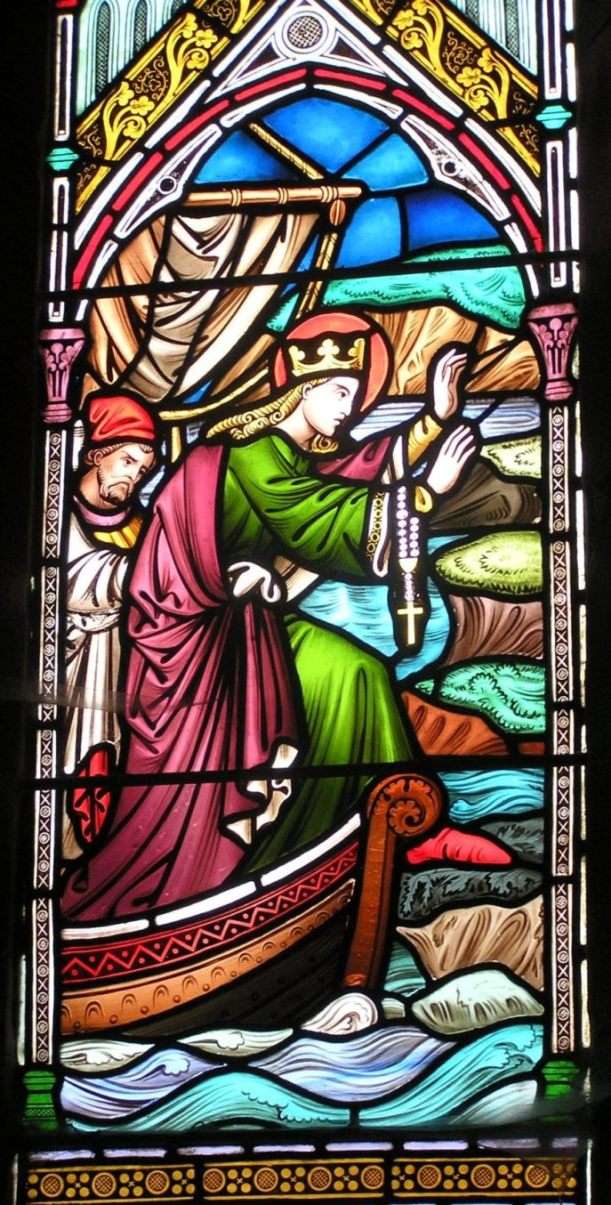
I've previously indicated my scant interest in matters ecclesiastical. I have an especially hard time with anchorites and anchoresses. St. Becga was a Leinsterwoman, who is alleged (but not by the DIB) to have declined an unwelcome marriage proposal and fled to England, where she is said to have founded a community in Northumbria.It's always seemed unlikely to be that God would want any of his people to brick themselves up in a small cell as proof of their piety and faith, but it was certainly popular for a while. The place of Becga's foundation is now called St. Bees, which reminds me of an entirely irrelevant anti-limerick, attributed to W.S. Gilbert: "There was an old man of St. Bees,/Who was stung in the arm by a wasp; /When they asked, "Does it hurt?" /He replied, "No, it doesn't, /But I thought all the while 't was a Hornet."


I'm nowhere near my self-imposed ration of pages for today. But the next pages of the DIB comprehend the Becketts and the Behans ... and deserve a new page on a new day.

Marginal men, vintners, brewers and the best tax exile ever

In the early 1990s, the historian R.F. (Roy) Foster published a bravura essay, Marginal Men and Micks on the Make: The Uses of Irish Exile c. 1840-1922. The "marginal men" were Englishmen (and women) who found in Ireland "dreams or ideas or insecurities too uncomfortable for home", whle the "Micks on the make" were Irish who succeeded in England. Foster was on to something: there's a class of English person who finds in Ireland an opportunity to invent (or reinvent) him or herself. Politicians have done it, from Lord Randolph Churchill to Enoch Powell, both English parliamentarians who wrapped themselves in the Orange flag (it was Churchill who coined the phrase "Ulster will fight, and Ulster will be right"). More benign examples can happily be found:  Micheál Mac Liammóir abandoned his original persona, Alfred Willmore, an English child actor, and transformed himself into one of the foremost Irish (and Irish speaking) actors of his era, with an international reputation. And then there was Arnold Bax, the composer. He was from suburban London with no obvious Irish connections. But in 1902, when he was 19, he read Yeats' The Wanderings of Oisin and, as he was to put it in his memoirs, "the Celt within me stood revealed." He moved to Dublin in 1911, where his then-wife gave birth to two children, Dermot and Maeve. He knew Yeats, George Russell and Padraic Colum, and embraced the nationalist cause. Although his romantic life took him back to England after a few years, he remained close to Ireland; he was on a trip to Cork when he died in 1953, and is buriend there. Among his Irish-inflected works is Moy Mell (from Maegh Meall, or a delightful plain), a lovely tone poem for two pianos. In 1992, Ken Russell made a television movie called The Secret Life of Arnold Bax, in which he himself played the composer; I recall the film, and Russell's performance, as endearing and charming.

Foster's delineation of maverick men gets a bit wobbly as the essay proceeds and the blow-ins get a little less English and a little more Irish. Thus, Robert Barton, a leading figure of the war of independence and born in Co. Wicklow, starts to get slipped in as an Anglo maverick on the apparent grounds that he went to public school in England followed by university at Oxford. Well, so did I, and I don't think the face fits. Ironically, Foster, whose historical revisionism has, quite properly, insisted on extending Irish identity beyond narrow nationalistic confines, falls into his own trap, and starts classifying as English mavericks those whose identification with Ireland flows naturally from their own lives, family and experience without conforming to a certain narrowly-constructed concept of nationality. Barton underwent a political transformation - his Irish family was strongly unionist and he switched sides - but his Irishness, in the sense of being wedded to people, place and culture, does not appear to have been adversely influenced by his education. I admit to being a bit sensitive about this: twice in my adult life, I've dealt with other Irish questioning whether my surname - Grantham - was "really" Irish. As I've previously explained, it is and it isn't, but the question is essentially irrelevant. Consider the leaders of Irish independence: Pearce (English father), Connolly (born in Scotland), De Valera (Spanish), Lemass (Huguenot) and so on: we're as mongrel as the next race and thus have to have a big tent, racially speaking. Foster is on to something: some people, like Bax or Mac Liammóir, fasten on to the place without any previously striking connection (although the outcomes of their fantasies seem to me to be wholly positive). But there are attenuated or semi-attenuated connections to the country that give rise to suspicion even from those, like Foster, who would tend otherwise to be big tent Irish. In this, I think the revisonists' suspicion of nationalism overpowers their sense of inclusion. Thus, Barton's embrace of revolutionary politics, combined with his time in England, pushes him into the "marginal man" category. The same goes for his first cousin, Erskine Childers (author of The Riddle of the Sands) whose pre-revolutionary Irish connection consisted of beign Barton's first cousin and, as the DIB says, their growing up "together almost as brothers." Childers took the hardline anti-treaty position that fomented the terrible civil war of 1922-23 - not a position I agree with. But his execution by the Free State government on trumped up charges - pour encourager les autres - was one of the low points in the emergence of modern Ireland. I don't think he deserves Foster's condescension.

Many of the Bartons were in the wine trade, associated with the still-active Barton & Guestier house in Bordeaux. They were among the so-called "wine geese", a play on "wild geese", meaning the Irish who exiled themselves to continental Europe in the 17th and 18th centuries. In addition to the Bartons, the wine geese included such families as Lynch (of Lynch-Bages), Kirwan, Phelan (of Phélan Ségur) became leaders of the trade in Bordeaux, while the Hennessy family established itself next door in Cognac. It's an odd ripple in cultural history: why did the Irish get claret while the English got sherry and port?

I realize I'm not the first person to be drawn to the name Narcissus Batt - Paul Muldoon has a children's poem that uses it. The DIB describes a completely unremarkable Belfast banker of the late 18th and early 19th century who rejoiced in this florid praenomen, but doesn't explain why.  His brothers were named Samuel, Thomas, William and Robert. Who was smoking what the day Narcissus was born? (I swear I was at national school in Killiney with a boy named Bambi McKay: I've been unable to trace him, and sometimes wonder if he de-exoticized his name, the way Zowie Bowie became Duncan Jones.)

The Bartons were to claret what the Beamishes were to beer. Beamish stout has been brewed in Cork since 1792, although I confess to preferring its formerly crosstown rival Murphy's. (Formerly because, as a result of corporate consolidation, it's now manufactured at Murphy's brewery, which is owned by Heineken.) As was customary for such grandees, their commercial activities were a springboard to politics and other public service. For some reason, the family had Scandinavian connections: one North Ludlow Beamish, married to the daughter of a Swedish minister, devoted his retirement to the study of Nordic antiquities; another, Richard Henrik, studied agriculture in Denmark and wrote a treatise entitled An Improved Method of Feeding Milch Cows  based on his researches as well as one on the "content of butter."

The Chester Beatty Library in Dublin Castle is one of the joys of the city, an amazing repository of East Asian, Islamic and European manuscripts, pictures and objects, assembled by one of the great collectors of the 20th century. The collection arrived in Dublin in 1950 when Beatty, an American with Irish roots and a mining fortune, baled from the agressive tax regime in the UK to find a sympathetic ear from an Irish government eager to loot the patrimony of the old enemy. My mother, a great lover of Asian art, was a regular visitor to the old library in Shrewsbury Road. Beatty gave his immense collections to the Irish people (as well as the library, there are holdings in the National Gallery and the military museum at the Curragh). We were grateful, and still are. He was the first person born outside Ireland to receive a state funeral and the only private citizen to do so. God bless such marginal men.