Wednesday, February 3, 2010

The first Boycott, the Belfast charioteer, a scarcely-known composer and little-known writer

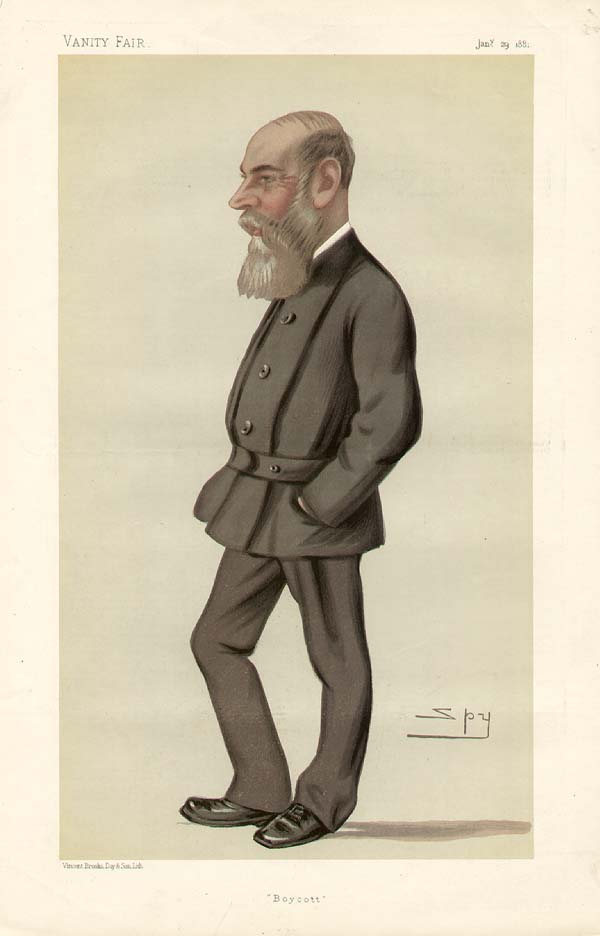
I have a distant memory of the 1947 film Captain Boycott, one of many black and white features that used to be staples of television viewing in the days before color television. Principally, I recall the great Scottish actor Alastair Sim playing an Irish priest Father McKeough - based on the real life Father John O'Malley - who led the popular ostracism in 1880s Co. Mayo of Charles Cunningham Boycott, an English land agent who while no "brutal tyrant" according to the DIB, believed that "the Irish peasantry were prone to idleness and required firm handling." In gratitude, said Irish peasantry meted out some firm handling of their own, partly inspired by the Irish political leader Charles Stewart Parnell, who had advocated the ostracism policy. (In the film, Parnell is played by Robert Donat, which at least is an improvement on the Hollywood biopic in which the great man was incarnated by Clark Gable, with Myrna Loy as Kitty O'Shea.) I do recall Sim getting the stirring closing speech, in which he describes what will be done to all others in the future who attempt to do what Boycott had done: "We shall boycott him!" It turns out that Father O'Malley actually did come up with the idea of turning the surname into a verb, helped by a journalist pal who popularized the term. The real Boycott's case became a cause célebre: the government brought in blacklegs to harvest crops at a cost of 30 times their actual value. Boycott, completely intransigent, believed the cure to Ireland's agrarian problems was emigration and industrialization. Happily for him, he got a job back in England, although he used to return to Ireland to holiday and, who knows, to gloat.

Stephen Boyd. Hollywood turns up so many one-hit wonders, and this Belfast man (Glengormley, near Belfast, as it happens) was one of them. But his one hit was a considerable one, Ben Hur, where he played the charioteer Messala to Charlton Heston's eponymous hero and became a huge, if somewhat short-lived star. He started out in amateur dramatics, and the DIB suggests that his pre-Hollywood career was somewhat perfunctory: in fact, he appeared in nine films in three years, including opposite Brigitte Bardot in Roger Vadim's 1958 melodrama Les Bijoutiers du clair de lune (The Night Heaven Fell).  Post-Hur, the DIB records mainly his disappointment with his roles, without mentioning that he nonetheless appeared in films by John Huston, Edward Dmytryk, Richard Fleischer, Anthony Mann, Jean Dellanoy and Romain Gary. (I'm beginning to think the DIB isn't completely sure footed when it comes to film and television.) He dropped dead on the golf course at the age of 49.

I found the tiniest fugitive clip of the music of Ina Boyle, taken from a 1948 live recording with authentic coughing in the background. She was from Enniskerry, Co. Wicklow, not far from where my mother grew up and my father now lives. She studied under Ralph Vaughan Williams, who counted her as a favorite student, and composed widely, including an opera, three ballets, orchestral, chamber and choral works. She spent five years setting an Edith Sitwell poem to music, only for the poetess to refuse to let her have the rights. Much work went unperformed and unrecognized. Once, she grew peas to pay the bills. I couldn't find any of her music currently recorded, which makes the short, haunting clip even more precious. I'd like to hear more.


I wasn't familiar with the writer Patrick Boyle, but the DIB entry sent me to a short story of his in the Field Guide Anthology of Irish Writing. The story, Myko, is a nice little dark account of a publican's attempt to defraud a tinker over the sale of a coffin, and has a good sting in its tale, Roald Dahl-style. Boyle was a bank employee (he declined to follow his family into the law because of his stammer) "who struggled to write in between working and drinking." In 1965, he sent in 14 short stories to an Irish Times literary competition and took the first 5 places. The DIB says his "reputation receded somewhat in later years", but based on Myko, he's certainly worth a read, and I shall seek him out.


Tuesday, February 2, 2010

The bigamist, the Balkanist, the banker, the big speech and the big house

The Dublin-born actor-playwright Dion Boucicault's bigamous marriage to a 25 year old Australian actress - he was 65 at the time - landed him much attention and helped fill theatres in America while he disentangled himself from his prior entanglement. One play of his at this time was called Lend Me Your Wife. Given the fate of the first Mrs. Boucicault - it was said he pushed her off a mountain-top in Switzerland - the wronged second was probably lucky to get things sorted out in the courtroom. He was very familiar with the legal system, having been declared bankrupt three times, but in his chaotic life, now largely forgotten, he pulled off some real achievements. He wrote around 150 plays, and some of them were big hits in London and New York. He is credited with the invention of the theatrical matinee, obtaining royalties for playwrights in the English and American theatres and changes to the U.S. copyright law that gave the authors the right to print and publish their work. He had a very public affair with another actress Emily Jordan, that culminated in a farcical encounter with her husband. Boucicault was visiting Emily in her rooms (she had moved out of her husband's home) when Mr. Jordan turned up. Boucicault hid in the rooms of another lodger, a Colonel Gibbon, who was out. As Col. Gibbon returned home, the marital brouhaha was in full swing, and the colonel was asked to intercede, which he did by calling the police and having Jordan arrested. Jordan sued Gibbon for false arrest and in the ensuing court case, Boucicault's adultery was made very public, although it took the then-Mrs. B another 19 years to get around to divorcing him. (The DIB calls the wronged husband Gibson, but I think that's incorrect.)

The DIB has a standard format for presenting its entries: surname, forename (birth year-death year) and professional description. It's the last piece that so often makes you want to read on: thus, "BOURCHIER, James David (1850-1920), journalist and Balkan intermediary". If I'd known I could have been a Balkan intermediary I would have studied harder at school. (A fellow postgraduate student ended up as head of the Bulgarian service of the BBC, so even then I should have known it was feasible.) Bourchier, a Limerick man, became a journalist because he went deaf following an attack of measles and had to stop teaching. The DIB entry has a segue that begs a thousand questions: "Having engaged in some journalism - the Globe published some articles he had written on evictions in Ireland - he was offered in 1888 the post of Balkan correspondent of The Times." Of course he was. In Byronic fashion, he threw himself into advocacy of anti-Turkish independent movements, which in a journalistic sense somewhat vitiates the "honesty and disinterestedness" with which the DIB credits him, although that refers more to his relations with the independence-seeking locals. It's claimed he won "the trust and affection of presidents and peasants alike", which sounds like gilding the lily.  Regardless, he appears to have been indefatigable in the Bulgarian cause, and was very disappointed when it sided with Germany and Austria-Hungary in the First Wold War; despite this, he believed that the post-war Treaty of Neuilly-sur-Seine, which forced Bulgaria to pay substantial reparations and hand over land to Greece, Romania and the newly-formed Yugoslavia, wss unfair. The Bulgarians certainly appreciated his efforts: declared national mourning when he died, named a street in Sofia after him and put his face on three different stamps. If he hadn't caught the measles he probably would have died a schoolteacher.

The de Burghs arrived in Ireland  with the Normans around 1175 and spawned a vast array of surnames: de Burgo, de Burca, Bourke and Burke. There are 17 pages of Bourkes in the DIB, but I couldn't get involved with many of the predictable procession of aristos and clergy. However, one such, Patrick Bourke, interested me a lot. His father, a grocer and publican, lost his business and Patrick had to leave school at the age of 14, whereupon he joined the civil service. Two years later, he transferred to the Inland Revenue, and two years after that, he entered Trinity College Dublin, while continuing to hold down his full time job. (Ironically, Trinity was regarded as the establishment - Protestant - college, while University College Dublin, more broadly based and Catholic-identified turned him down because it didn't believe he could make the lectures.) He won a foundation scholarship, three gold and four silver medals. He graduated in four years, began training as a barrister and topped his class in the final exams. All the while, he continued to work as the Inland Revenue, where he became the youngest-ever full inspector of taxes, at the age of 22. He crossed over into the private sector and became a banker, where he oversaw the consolidation that created Allied Irish Bank, one of the country's major retail banks.  Just his c.v. made me exhausted.

Thomas Francis Bourke had one of those lives which seems impossible but which in the nineteenth-century revolutionary movement was almost typical. His family was uprooted from Tipperary by the famine and moved around north-eastern American and southern Canada. He became a peripatetic house painter and found himself in New Orleans at the outbreak of the civil war.  He joined the confederate army, fought at Antietam and Gettyburg, was wounded, taken prisoner and spent the rest of the war in Fort Delaware, or rather the swamp by the fort, in which more than 2,000 prisoners died. After the war, he returned to New York, joined the revolutionaries of the Fenian movement and was sent back to Ireland to take command of the Tipperary district in the 1867 rebellion. His health was so poor that when he was interviewed by the police upon arrival, they believed his story that he wanted to see friends before he died. The rising was a fiasco, and Bourke was taken prisoner, tried for treason and sentenced to death (the sentence was later commuted). His speech from the dock was considered by contemporaries to be one of the great ones, to rival that of Robert Emmett, another leader of a doomed rebellion:
I have ties to bind me to life and society, as strong as any man in this court. I have a family I love as much as any man in this court does his. But I can remember the blessing received from an aged mother's lips, as I left her the last time. She spoke as the Spartan mother did—" Go, my boy. Return either with your shield or upon it." This reconciles me. This gives me heart. I submit to my doom, and I hope that God will forgive me my past sins. I hope, too, that inasmuch as He has for seven hundred years, preserved Ireland, notwithstanding all the tyranny to which she has been subjected, as a separate and distinct nationality, He will also retrieve her fallen fortunes—to rise in her beauty and her majesty, the sister of Columbia, the peer of any nation in the world.
God, mother, nation: the pillars of old-style Irish nationalism, particularly in the physical force tradition that Bourke embraced. How alien all of that would have been to Elizabeth Bowen, born in Dublin but with a family seat in Kildorrey, Co. Cork, less than 40 miles from Thomas Francis Bourke's birthplace. Although identified in so many ways with England, where she was mainly raised, educated and lived, she was connected umbilically to Bowen's Court, the Big House built by her family following the Cromwellian settlement and which she strove to preserve, despite huge financial strain, into the 1960s, when she finally yielded and sold the site for later demolition. In her last years, she remained nearby and was buried in the church next to where the house had been. In one cultural sense, Bourke's story is the quintessentially Irish one, with displacement, burning national identity, anger, resistance and the embrace of martyrdom. But Bowen, like so many others of her class and background, was also yoked to the place, the land, the culture and the country, sometimes with ambivalence, but ultimately with a similar determination.
Sunday, January 31, 2010

The lucky pirate, the unschooled geniuses, the beautiful girls in kimonos and the floating politicians

Anne Bonney is everybody's favorite pirate.(The slovenly-attired doxy in the picture probably looks nothing like the real thing.) You can find a version of her story in Daniel Defoe's A General History of the Pyrates, which includes the observation, based on Bonney's origins and career, that "Bastards have all the Luck." He makes a good point: she was said to have killed her servant with a knife and severely beaten an importuning swain. When she married a loser, her lawyer father, by now translated from Cork to South Carolina, kicked her out of their home and impelled them off to the Bahamas, where she ditched the loser and hooked up with Calico Jack Rackham, the designer of the Jolly Roger. They set off together on a pirate spree: she seems to have embraced the life wholeheartedly, as well as giving birth to one child by Rackham and conceiving another before finally getting caught. Her pregnancy saved her from the rope, and her father pulled strings to get her released, although Rackham was executed. She was only 23. Free of that particular encumbrance, she returned to South Carolina, delivered of Rackham's second child, married again, had eight more children and lived to the age of 84. Luck indeed.


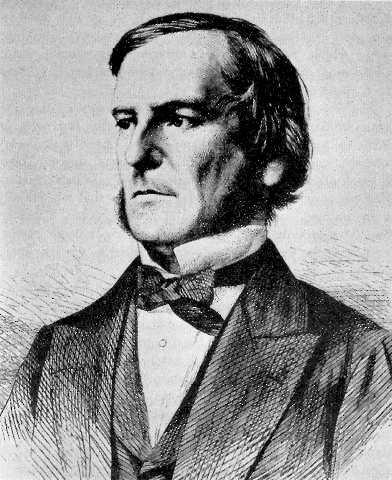
George Boole we know about because of Boolean logic, used by all of us however imperfectly to frame search requests in databases. He was English, from an impoverished family, and basically self-taught; however, he managed to establish connections with leading mathematicians and to publish research papers. When new universities were established in Ireland, Boole was encouraged by the future Lord Kelvin to apply for a chair at Queen's College (now University College), Cork. He had no degree - had not even completed secondary education - but was appointed professor of mathematics in 1849. His work on logic and probability theory was controversial and apparently wrong in many respects - difficult for me, who hasn't tackled a mathematical problem in 35 years and wasn't much good at them back then - to say, although it appears that his approached were influential even if his results were flawed. 


George's daughter Alicia, born in Cork, became a distinguished mathematician in her own right (although the DIB refers to her "mathematical hobby"), pioneering research on four-dimensional shapes (she coined the term "polytope", still in use, to describe them). The closest she came to the academy was an honorary degree from Groningen University.  Here sister Lucy also never attended university, but became a distinguished chemist: It's reported elsewhere (but not in the DIB) that she became the first woman professor of chemistry at the Royal Free Hospital in London. Another sister, Ethel Voynich, became a successful knowledge The best conclusion to be drawn from the Boole family careers is that a university education should be avoided at all costs.


I discovered a new profession in today's reading: "sailing butler". This title was conferred on one Thomas Kilagallon, who began serving Sir Henry Gore-Booth and his family at the age of 11 and continued for more than 70 years. He became waterborne because Gore-Booth was fond of sailing expeditions, including to the Arctic and he had to accompany his master on these life-threatening voyages. Gore-Booth eventually died of the flu, although only in Switzerland. A scion of a Big House family in Ireland since the 17th century, he had a train named after him following his death. More substantial were Henry's daughters Constance the revolutionary (whom we'll hear more about when we reach her married name, Markievicz) and Eva, described enticingly by the DIB as "poet, mystic, trade unionist and suffragist." (In the picture of the two of them, Eva's on the right.) She campaigned for the rights of the poor, particularly women, including for "pit brow workers, women acrobats, barmaids and Oxford Circus flower sellers." (Explanation: pit brow workers were women who performed manual work above ground at coal mines; Oxford Circus is a busy London intersection, not a circus.) She campaigned, successfully, for her sister's reprieve from execution after the Easter Rising and believed that she remained in post mortem communication with her. After the deaths of Eva and Constance, Yeats, who used to visit their home in his youth, wrote a poem in their memory, Two girls in silk kimonos, both /Beautiful, one a gazelle" (Eva was the gazelle). It's an odd, poignant poem, ambivalent about their political causes but aflame with what they meant, back in those lost days. (An oddity of the DIB: people with double-barrelled names are listed alphabetically by their second such: thus, the Gore-Booths are listed under the "Bs", where I think nobody would go to look for them first.)


I took a shine to Achmet Borumborad, né Patrick Joyce, the "quack and fraud" who promoted Turkish baths in Dublin in the 18th century. He said he was from Constantinople, but probably hailed from Kilkenny. He walked around Dublin in what he said was Turkish dress, including "an immense turban".  He was successful in obtaining public financial support for his baths, based on their supposedly health-improving qualities. However, in a hilarious account of a party thrown for Irish parliamentarians, Jonah Barrington describes how the assembled power-brokers became roaring drunk and went tumbling into the baths: Borumborad "espied 18 or 19  Irish Parliament men" in the cold salt-water bath "floating like so many corks upon the surface or scrambling to get out like mice." That was pretty much it for Achmet, although there's a bizarre coda: one William Gregg of Antrim mentioned him in his will, asking that if he should "at any time change his name that he will take the name of William Gregg in remembrance of me." Sometimes, there's so much more you want to know from the shards left to us by these incomplete histories.

Saturday, January 30, 2010

The red rose renter, the librarian soldier, tennis wrapped in the flag and the decline of a dynasty

They must have been ferocious times, those 150 years or so from the mid 16th century on when so much Irish land was confiscated by the British crown (and, for a while, Commonwealth) and reallocated to faithful servants brought in to quell the natives. One thinks of this period in terms of constant violence and upheaval, although there were a few dark jokes along the way. I thought one of those was the grant during the Munster plantation of Gerald FitzGerald's confiscated lands to an English grandee, Thomas Blennerhassett, for a an annual rent of one red rose. At law school you learn about paying rent in peppercorns, so the idea isn't completely alien. That said, it suggests that the spoils came pretty cheap to those who were in the right place at the right time: in fact, it appears not quite as cheap as the DIB has it, since the Blennerhassett family history says he also had to pay six pounds a year. Still, they must have had great laughs every time the red rose thing came up.

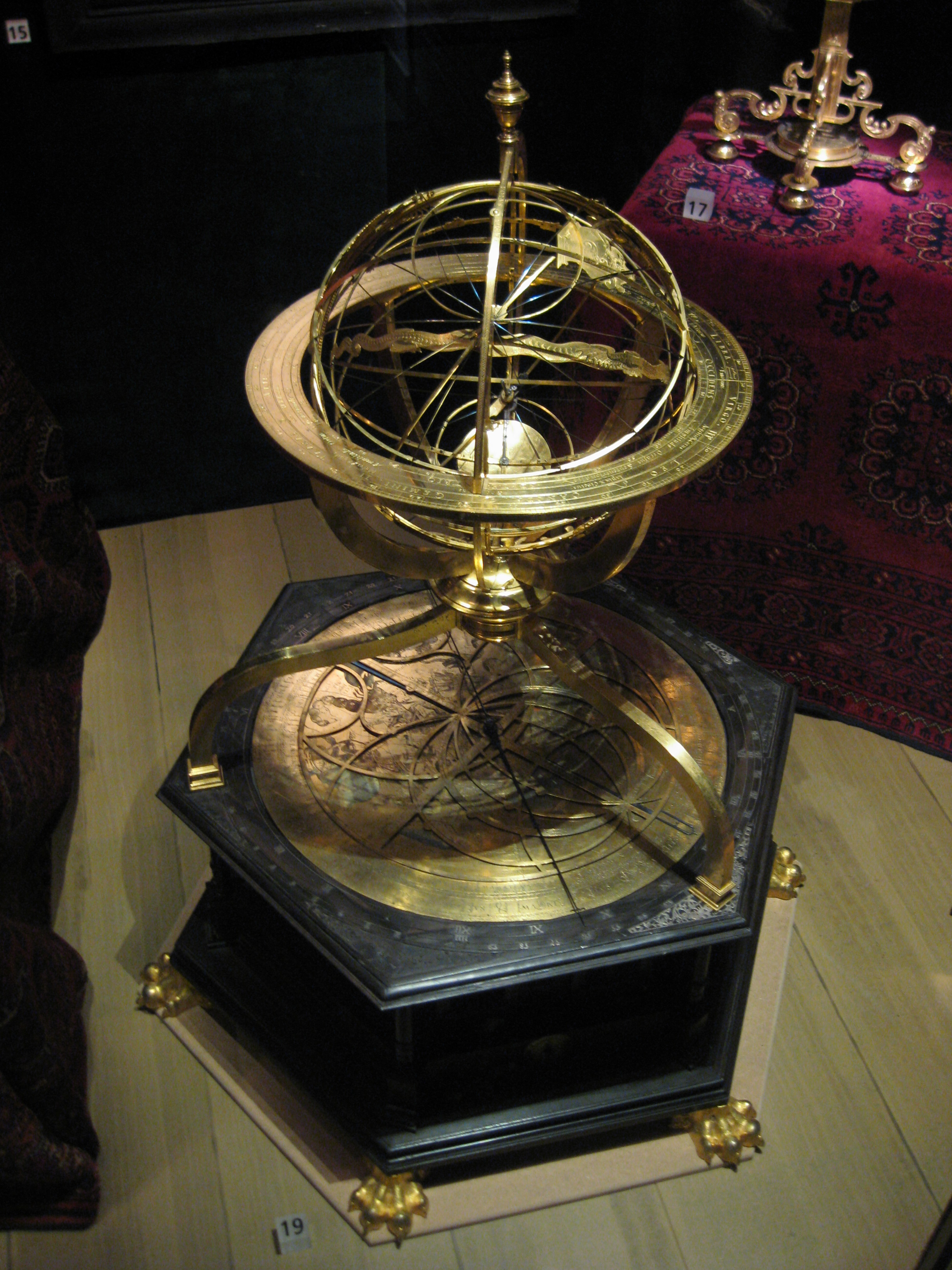
At one point, I spent a lot of time sitting in the Bodleian Library in Oxford, where I liked to look at girls and occasionally read ancient books. (On one such, an 18th century pamphlet by an Oxford don, a prior reader had written next to the author's name. in impeccable script akin to Bodoni type, "A Dull Rogue!" I felt his pain.) Thomas Bodley was the Merton College fellow who re-organized the library that now bears his name. His youngest brother Josias was also at Merton, but didn't graduate. Instead, he became a soldier, and wound up in Ireland, fighting a further stage of the wars that so benefitted the Blennerhassetts. He was a talented engineer who excelled in the siege of Kinsale on 1601. The book thing seems to have been in the blood, since the conquering army showed its gratitude by subscribing funds to the new library at Trinity College Dublin. Robert also gave the Bod an astronomical quadrant and an armillary sphere (not the one pictured, but like it).

There are quite a number of Bolands in the DIB, so I expected to find something about the greatest of them all, the founder of Boland's Biscuits, still hanging on in Ireland as part of the conglomerated Jacob Fruitfield Group. Boland's Mill in Dublin was also a major site of the Easter Rising, so it wasn't unreasonable to hope for something. Well, I was disappointed. There is a passing reference to Patrick Boland, "a prosperous milling merchant", but none to his biscuit empire that, unlike regular empires, brought peace and pleasure to the people of Ireland. Fortunately, there are other pleasures to be found among the Bolands. John Pius Boland, Patrick's son, won gold medals in the men's single and doubles tennis at the first modern Olympic Games in Athens in 1896. He was visiting and was "persuaded to take part". Scandalously, he insisted that the Irish, not the Union flag be raised at the medal ceremonies and the Greeks complied. I'm not sure what Irish flag that would have been - more likely a harp on a Green background or even St Patrick's saltire, not the modern Tricolour. The gesture propelled him into political life, where he served as an Irish party MP at Westminster until 1918.

Most of the other DIB Bolands are a clan that epitomize one historical sweep of Irish life and politics, from fomenting revolution through civil war, the forging of a new state and, ultimately, the discontents of becoming the new political establishment. The story begins with Jim Boland, Manchester-born (in 1856) of parents from Roscommon and Galway. Although he joined the Irish Republican Brotherhood and was an early leading light of the Gaelic Athletic Association, his activities were as much intra-nationalist as anti-British: he died from head wounds received in a confrontation with other nationalists, reputedly protecting Charles Stewart Parnell.

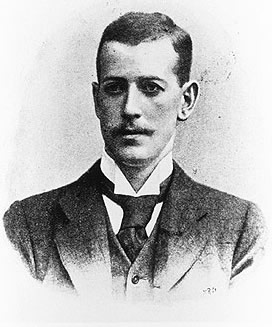
Jim's sons Gerald and Harry (pictured) inherited their father's revolutionary fervor. Gerry was disciplined, sea-green incorruptible: during the war of independence he renounced meat, dairy, alcohol and tobacco, the better to serve the cause.  He claimed that his yoga regimen helped him get through the 40-day hunger strike conducteed by anti-treaty prisoners during the civil war. Harry was wilder, a singer, sportsman, drinker  and womaniser who rose steadily in republican ranks as he caroused with Michael Collins (they finally fell out, over a woman, Kitty Kiernan, as well as politics).  Harry was killed by his former comrades during the civil war, while Gerald survived, perhaps fortunate to have been interned during the worst part of the fighting. Entering politics, he became notorious for cracking down on nationalists who clung to the gun - 15 IRA volunteers died during his time as justice minister - and for instituting censorship during the Second World War, while Ireland was neutral.

Yet he was "a man of comparatively liberal instincts, according to the DIB, for instance pushing back the power of the catholic church despite his personal devoutness. His son Kevin went into the family business, becoming a government minister and interning IRA members. Like his father, he deplored the activities of Taca, which channelled funds from businessmen to his Fianna Fáil party, but unfortunately in his government role he took planning positions similar to that of the Taca beneficiary, Neil Blaney, which led to the destruction of important parts of Dublin's Georgian architecture in the 1960s. (Boland dismissed the conservationists as "belted earls and their ladies and left-wing intellectuals.") On another occasion his red-baiting included an assault on "Conor Cruise Castro God Bless Albania O'Brien." He became isolated in the party as the Troubles progressed, particularly for his attacks on the arms trial. He founded his own completely unsuccessful party (loyally supported by his father, and wrote a number of increasingly blimpish books with title like Fine Gael: British or Irish?) He went on hunger strike against a planning decision (ironic, that). One commentator said that politics was "the last vocation that he should have considered." The DIB tries to be kind, elegantly: Kevin "combined rigid arrogance with a strange innocence; unable to reassess his family's ideological inheritance, he was destroyed by it, raising a limp flag in a sad hour." The problem is that Fianna Fáil, having abandoned anachronistic ideologies, hasn't found a raison d'être to replace them, apart that is from the acquisition and retention of power, at which it continues to excel.

Wednesday, January 27, 2010

The steeplechaser, the pretend cannibal, the glory-seeking footballer and the glory-seeking politician

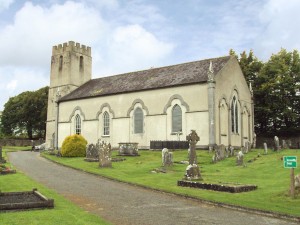
I'm not really a believer in foundation stories. It strikes me as unlikely that anybody actually invented the sandwich, let alone the nocturnal gambler, the Earl of that ilk. Years ago, somebody once spun me a story about mayonnaise being named for the Balearic city of Mahón (which may be the case, although the Larousse Gastronomique thinks otherwise), and that Mahón was named for an Irishman named Mahon (it's probably named for a Carthaginian named Mago, as it happens). But the stories stick, like mayonnaise to a spoon, and we seem to like them, if not need them. Mercifully, nobody says the steeplechase is named for Mick Steeple. But it's claimed to be a product of the Irish genius, all the same. In 1752, one Edward Blake raced a Mr. O'Callaghan on horseback from Buttevant church in Co. Cork to the steeple of the church in Doneraile, four and a half miles away. The DIB says that the church is named for St. Leger, but I think it's actually St. Mary's, Viscount St. Leger having built it. One notable feature of the church as pictured: no steeple. Apparently, it blew down in 1825. I'm not sure that I believe that Mr. Blake was responsible for the steeplechase: it seems obvious that people would race towards a well-known place that all knew, and that a village church is an obvious choice. But there's a plaque for Blake and O'Callaghan in Buttevant; who am I to argue with lapidary history?

Colin Blakely, from Bangor, Co. Down, was an actor of the highest order. I was watching him the other night in Billy Wilder's late film, The Private Lives of Sherlock Holmes, in which Blakely played Watson to Robert Stephens' Holmes (and Christopher Lee's Mycroft). It's an uneven film, partly because of studio interference - there are legends about missing footage that are probably, sadly, untrue. But the best parts are wonderful, and one of the very best is the visit of Holmes and Watson to the Russian Ballet, where Watson/Blakely, unleashed by the nearness of so many beautiful women in the corps de ballet, slowly realizes that Holmes, to avoid an unwelcome proposition, has circulated the story that the two of them are a couple. Blakley's performance as the male dancers close in on him, pushing past the gorgeous, disabused, departing danseuses, is a gem of comic rage. I saw him twice in one of his finest stage roles, in a Barry Collins play called Judgement, a three-hour solo piece in which Blakely played a Russian military officer abandoned in a cellar for two months who turns to cannibalism and addresses the audience as his judges. I was about 17 and was so impressed by his performance at the ICA theatre in London that I went to see it again when it transferred to the Old Vic, which was then home to the National Theatre. I used to buy the cheapest tickets back then - I think they were only 40 pence - so found myself down in the front row of the Vic with my friend Neil Haines. Neil was - and is - a wonderful man, but not, shall we say, a lover of heavy theatre. As Blakely worked his way through his - for me - mesemerizing performance (there was no interval) on a bare stage with just one prop, a human bone, Neil fell asleep. (We were in the front row, remember.) After a while, he began to snore. I was mortified, but also in a crisis. If I nudged Neil, I was worried he'd wake with a start, maybe let out a bellow. So I elbowed him gently, disturbing him just enough to stem the noise. I shouldn't have worried. I read that some time later, somebody had a heart attack during a performance. Blakely saw it, jumped off the stage, gave the man CPR, waited for the ambulance to arrive, then climbed back on and resumed his discourse on cannibalism. I'm pretty sure I also saw Blakely play Christ in Dennis Potter's Son of Man on the BBC in 1969, a rough-hewn, demotic Messiah. As I say, he was a wonderful actor.

The least of Danny Blanchflower's achievements was the 10 months he spent managing my team, Chelsea, in 1978-79. It was an abject time for the club, with poor players and no money, and Blanchflower probably did no worse than anybody else would have with the same raw material. His playing career, notably winning the championship and couple double with Tottenham Hotspur in 1961, was just before my time, and distinguished: 56 caps for Northern Ireland, playing in the 1958 World Cup quarter finals, twice footballer of the year. As the DIB puts it, his philosophy was that "football was about glory and that the game should be about beating the other team with style rather than boring them to death." That's still the big issue in Irish football (soccer): how to play well and win? After his playing days, he was a good football journalist, on television and in print. His brother Jackie was also a top-flight player, 12 international caps and one of the legendary Busby Babes of Manchester United that were all but wiped out in the terrible Munich plane crash of 1958 (Jackie received the last rites on the airport runway but survived, his career shattered.)

Our paths have already crossed a couple of times with that of the politican Neil Blaney: his fellow party-member Frank Aiken excoriated the business-friendly cronyism that Blaney championed. And the civil servant Peter Berry blew the whistle on Blaney's efforts to run arms to Northern Ireland in the early years of the Troubles. Blaney was an extraordinary politician, who built a political machine in Donegal - based on that started by his father, Neal - that was so successful that he was able to detach it from his own party and run it independently for several years. Patrick Maume's entry on Blaney in the DIB is quite magisterial - maybe the best I've read so far. His summation is marvellous, writing of "the ruthless authoritarianism which marked his career ... [t]he volatile mixture of calculation, resentment, sophistication, provincialism, ruthlessness, and nostalgia which he displayed is reminiscent of other political figures of his intermediate generation: he might well have become taoiseach but instead became a catalyst for the formation of the Provisional IRA." It convincingly establishes the need for a full biography of Blaney.

Sunday, January 24, 2010

An inquiring doctor, two fine artists and a classic account of a ravaged Anglo-Irish family


I always liked the story of Robin Warren, the Australian hospital doctor who shared the Nobel Prize for medicine in 2005 for his work on the pathology of gastric ulcers. It appealed to me that someone based for far outside the big centers of learning could make such a big impact on science. Samuel Black was of a similar ilk: a physician in Newry, Co. Down from 1788 on, he began to report on cases that he encountered of angina pectoris, which had been first described in 1772, publishing details of 21 cases in all, 18 of which were accompanied by dissections that he conducted. He noted that clogging of the arteries - he called it "ossification" - was the visible feature that connected his patients, and predicted, correctly, that the "application of chemical principles" might permit the removal of these "deposits". (Others, including the English vaccination pioneer Edward Jenner, made similar observations independently of Black.) Black also became interested in the epedemiology of coronary disease, and was the first to comment on what became known, much later, as the "French paradox" - the fact that ischaemic heart disease - was comparatively rare in France. He believed that lifestyle, climate and stress conditions could explain this. There's a plaque commemorating Black over the Oxfam shop in Marcus Square, Newry, where he lived until his death in 1832.


Dorothy Blackham was a Dublin-born artist who exhibited constantly from the 1920s until her death in 1975. She worked on posters, linocuts, book illustrations and paintings, while teaching in Dublin schools. Her principal subjects were Irish landscapes, such as the illustrated Blossoming Chestnuts, first exhibited in Dublin in 1939. I'm descovering so many Irish artists through the DIB, particularly women. I've probably seen Blackham works at some time - they're apparently at the Dublin City Gallery and the Hugh Lane - but they're never previously registered with me. Even reproduced, you can see that she was a very fine artist and her work is worth seeking out, which I will.


Another fine discovery: Edith Blake - Lady Edith to the deferentially inclined - who eloped with her policeman husband and ended up in Canada with him where be was governor of Newfoundland. She had quite outstanding gifts as a scientific illustrator, such as this study of the sphinx moth, made in 1892. She also wrote plays and spoke nine languages. It's claimed that while in the Bahamas, she painted with a pet snake draped around her waist. A large collection of her work is in the Natural History Museum in London; her notebooks are at Myrtle Grove, near Youghal, the 16th century house built by Walter Raleigh in which she died in 1926.


Caroline Blackwood's Irish connections were both thorough and attenuated. Her father was the Marquess of Dufferin and Ava, descended from 17th century Scottish planters in Co. Down. Her mother's family were Guinnesses. She was born in London, and raised by nannies on the family estate near Belfast, after which her homes were in England, France and the USA. Instead, and more significantly, she became first muse to others, than a considerable artist in her own right. Her first husband, the painter Lucian Freud, painted her. Her third, the poet Robert Lowell, apostrophized her - "I love you every minute of the day; / you gone is hollow, bored, unbearable" (They divorced and Lowell remarried, but when he died in a New York taxi, he was holding a picture of her, done by Freud.) Lowell's mania distressed and ultimately defeated her, but it was during this marriage that she bloomed as a writer, including of Great Granny Webster, that fantastic account of life in a lunatic Anglo-Irish family. The description of Big House Irish life is marvellous: a ludicrous recreation of the English aristocratic grandeur in a landscape that can't support it, where the roof leaks perpetually and the servants wear wellington boots, where the menus are written in French by Ulster cooks who can't cook and where the narrator's grandfather never reads the Irish papers and refuses to hire catholics. It has something of the English comic gothic of Stella Gibbons and Mervyn Peake. but it depends for much on the madness - sometimes, literal madness - of being transplanted for generations to this unwelcoming place. She describes a ravaged family, and ultimately became ravaged herself although you sense that for her, like the suicidal Aunt Lavinia she describes in Great Granny Webster, that spiritual and emotional extravagance  was her way of staving off death, while she could.

Saturday, January 23, 2010

The typographer, the textual scholar, the unlucky Lucans, and the unluckier chief secretary

I have a fondness for typography, which I first learned about in printing classes at school, and then from my father. Michael Biggs was inspired by the great Eric Gill, like him a sculptor and stonecutter as well as typographer. Biggs designed the Irish script typeface for Ireland's pre-Euro banknotes. He carved altars, fonts and other features for churches all over Ireland, including at St Michael's in Dun Laoghaire, whose predecessor was destroyed in 1965 by a huge fire that I remember clearly. In this massive work of so many "great" lives of people who ruled, controlled, killed and otherwise had reign over the lives of others, it's a pleasure to see recorded the contribution of one who wrought many fine ordinary things that form part of our everyday visual furniture. Every time you took out your wallet, you saw something beautiful. The DIB says that Biggs was "a gentle man, affectionate and generous." As George Eliot said, " the growing good of the world is partly dependent on unhistoric acts."

We probably had enough of Charles Bewley yesterday.  In between his two ghastly stints in Berlin as a representative of the Irish state, there was a genuinely fine diplomat, Daniel Anthony Binchy, a fluent German speaker who made an impact in the right way - to the extent that any representative of a small country could make an impact in a big one - and received a signed portrait from Hindenberg upon his departure in 1932. He returned to academia, where his was one of the founding appointments of the Dublin Institute of Advanced Studies, a distinguished but somewhat eccentrically-constituted institution in that its fields of research are limited to Celtic studies and physics. In the narrow areas of ancient Irish legal history, palaeography and philology, Binchy became a giant. My copy of Fergus Kelly's A Guide to Early Irish Law, published by the DIAS, contains six pages of bibliography; more than one of these consists of works by Binchy. More unhistoric acts.

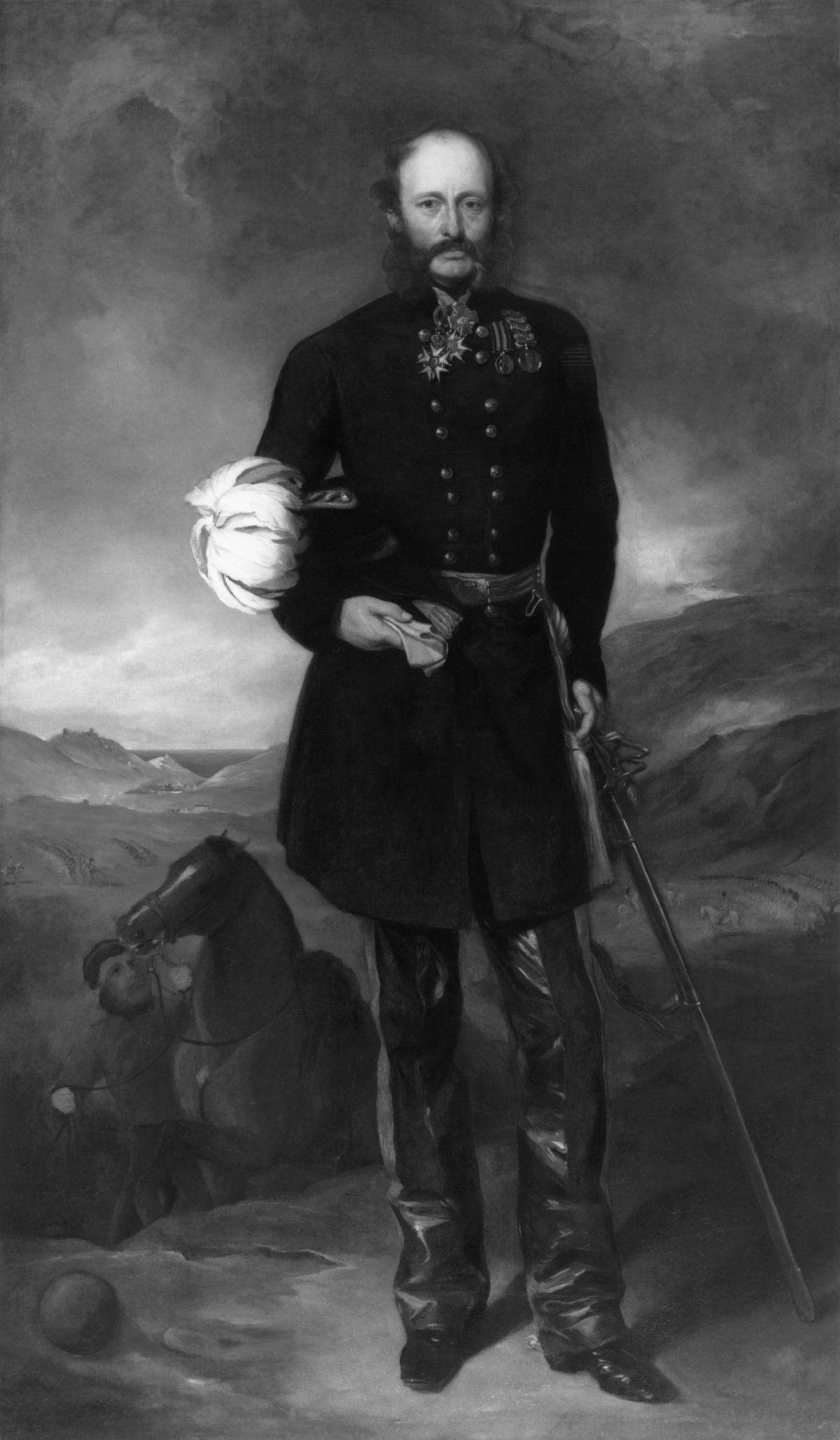
Another big family: the Binghams. The most famous of these for my generation doesn't figure in the DIB, since other than his family title, the Earldom of Lucan - named for a town west of Dublin - "Lucky" Lord Lucan the nanny-murderer had scant connection to Ireland.  Things started well: the first Earl of Lucan, Patrick Sarsfield, was one of the Irish commanders who gave William of Orange's armies a hard time during the 17th century Williamite wars. The title died out, but a distant relative of Sarsfield's arranged for it to be revived in 1776.  This new first Earl, Charles, was said to have been regarded with "great respect" by his tenants; this did not protect his home in Castlebar from being ransacked by rebels during the 1798 rising. Otherwise, he was a landed parliamentarian who did his bit for the interests of which he was a part. Sometimes, the details of such people are rather inconsequential: according to the DIB, "he was regarded as an amiable man, respected both in parliament and in Mayo ... [m]usically inclined, he was reasonably proficient on the German flute." Less proficient was the third earl, George (pictured), famous for a historic act: he ordered the catastrophic Charge of Light Brigade at Balaclava during the Crimean War. The DIB tells us that Lucan "lacked all common sense, and his severity and pettiness made him deeply unpopular with his officers and men." Although his military career formally ended then, he continued to accumulate military offices and titles, even being appointed field marshal in his 88th year.

Harold Binks was a Northern Ireland trade union leader. Unusually, he attended a multi-denominational infants school, an experience he later said influenced his anti-sectarianism. He was a classic working-class autodidact who left school at 14, started reading on politics and economics, was drawn into the union movement by both local and global conditions - the Spanish civil war had its impact, as well as poverty in Belfast - and rose and rose. He strove, successfully, to reunite the northern and southern trade union congresses and had his finest hour during the the unionist strike of 1977 which attempted, unsuccessfully, to bring down the Northern Ireland administration. He condemned the strike as a "fascist coup" and tried to mobilize the union movement against it. As so often with historic union moments, his was a gallant failure. But he was not wrong to regard it as "our finest hour."

Augustine Birrell was possibly the most interesting and capable British public servant to rule over the Irish. He was chief secretary in Dublin Castle in the early years of the 20th century and was more sympathetic to Home Rule in particular and catholics in general than most of his predecessors. I've recently been reading Leon Ó Broin's terrific 1966 biography of Birrell, a rich portraint of a genuinely interesting man. In the early part of his tenure, he successfully reorganized the university system and introduced important land reforms. Like many before and after him, he had problems with Irish traditions of political violence. His instinct to avoid coercion - a key element of the policy of his predecessor Balfour - steered him away from confrontation both with Ulster unionists when they began to militarize and the nationalist militias who organized in reponse to them. (Although his confrontation with the union leader Jim Larkin was more typically coercive.) His reputation was largely destroyed when the Easter Rising occurred on his watch: although the intelligence failures before the rising were largely those of other agencies, not of his, he nevertheless took - and accepted - most of the blame. The DIB's entry - by Kevin Barry's grand nephew Eunan O'Halpin - probably strikes the right balance in stating: "Had Birrell retired as he wished in 1913 or 1914, his political obituaries would undoubtedly have been kinder." He strove to do the right thing, which is more than you can say of most of his parliamentary predecessors - and successors in northern Ireland.

One final delight: John Birchenshea, the 17th century musicologist who devised a mathematical system for composition, which he claimed could teach a beginner to compose seven-part harmony in seven months. Deaf people could also learn the system. He helped Samuel Pepys set a couple of poems as songs, and was well paid for it.